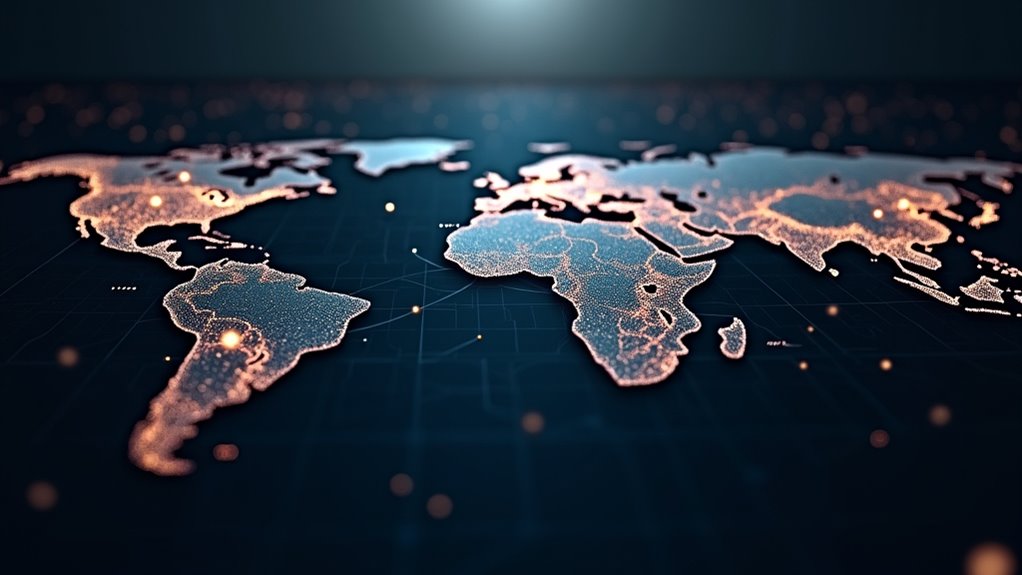
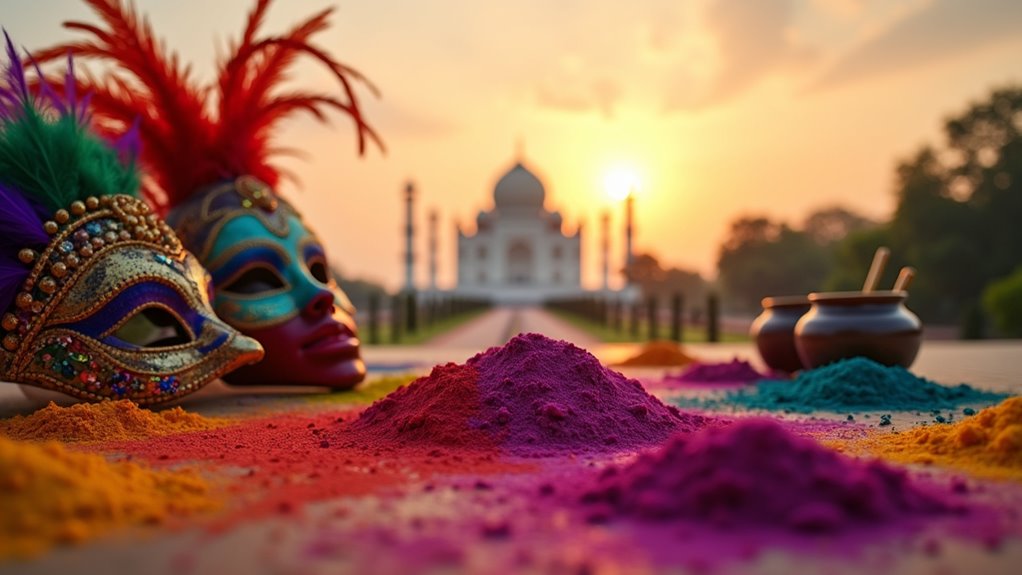
The world’s cultural tapestry shines through diverse examples. Linguistic variety spans over 6,000 languages, with English and Mandarin leading. Culinary heritage, like Ukrainian Borscht, ties food to identity. Festivals such as Brazil’s Carnival burst with vibrant tradition. Artistic expressions, from Sri Lanka’s Kandyan dance to Jamaican Reggae, tell unique stories. Architectural wonders like India’s Taj Mahal reflect history’s depth. Curious minds will uncover even richer layers by exploring further into this global mosaic.
Exploring the Global Tapestry of Human Culture
How does one even begin to grasp the vast tapestry of human culture that spans across the globe? With over 7 billion people speaking between 6,000 and 7,000 languages across 189 states, the sheer diversity of human expression is staggering. From Asia and Africa, where most languages flourish, to Europe’s 225 indigenous tongues, linguistic variety shapes identity and communication. Over half the world’s population is bilingual or plurilingual, weaving intricate webs of understanding.
English, with 1.46 billion speakers, and Mandarin Chinese, with 1.14 billion, stand as giants, yet countless smaller languages carry unique histories and worldviews worth preserving. The emergence of woke culture has also influenced how communities interpret and value different aspects of culture.
Culinary traditions offer another lens into cultural richness. UNESCO honors food as intangible heritage, from Ukrainian Borscht to Japanese Washoku, reflecting deep ties to land and history. Regional nuances, like Italy’s northern butter versus southern olive oil, reveal how geography shapes taste. Fusion cuisines, such as Mexican sushi or Korean tacos, show cultures blending in vibrant ways.

National dishes like Indian curry or Italian pasta have spread globally, adapted to local palates, while festivals tie food to ritual—think Diwali sweets or Lunar New Year dumplings. These practices aren’t just sustenance; they’re storytelling through flavor.
Festivals, too, paint a vivid picture of human celebration. From Brazil’s Carnival to India’s Holi, the festival of colors, these events mark seasons, faith, and community. Spain’s La Tomatina, with its chaotic tomato-throwing, or Mongolia’s Naadam, showcasing traditional sports, highlight unique expressions of joy. Many, like Turkey’s Kırkpınar oil wrestling, earn UNESCO recognition for their cultural weight. These gatherings aren’t mere spectacle; they bind people to shared history and seasonal rhythms, a reminder of collective roots in an often fragmented world. Cultural festivals celebrate unity and showcase the rich diversity of traditions.
Artistic expression further illuminates cultural depth. Performing arts, from Sri Lanka’s Kandyan dance to Brazil’s Capoeira, embody heritage through movement. Visual crafts, like North Africa’s Berber pottery or Turkish Ebru marbling, preserve ancient skills. Music, whether Indian classical or Jamaican Reggae, carries beliefs and stories across generations.
Some traditions, like Sinhalese dance with over 2,600 years of history, root modern creativity in ancient soil. Today, global influences like K-Pop show how tradition evolves, resonating worldwide without losing its cultural core.

Finally, architectural heritage stands as a symbol of human ingenuity. Ancient styles from Greece, Rome, and China continue to inspire modern design, while landmarks like India’s Taj Mahal encapsulate cultural values in stone.
These structures aren’t just buildings; they’re narratives of power, faith, and time. Examining culture through these lenses—language, food, celebration, art, and architecture—reveals patterns of resilience and adaptation. It’s not about romanticizing the past, but understanding how these elements shape today’s world.
Culture isn’t static; it’s a living, breathing force, and its diversity demands curiosity and respect, even when the story ain’t always neat.