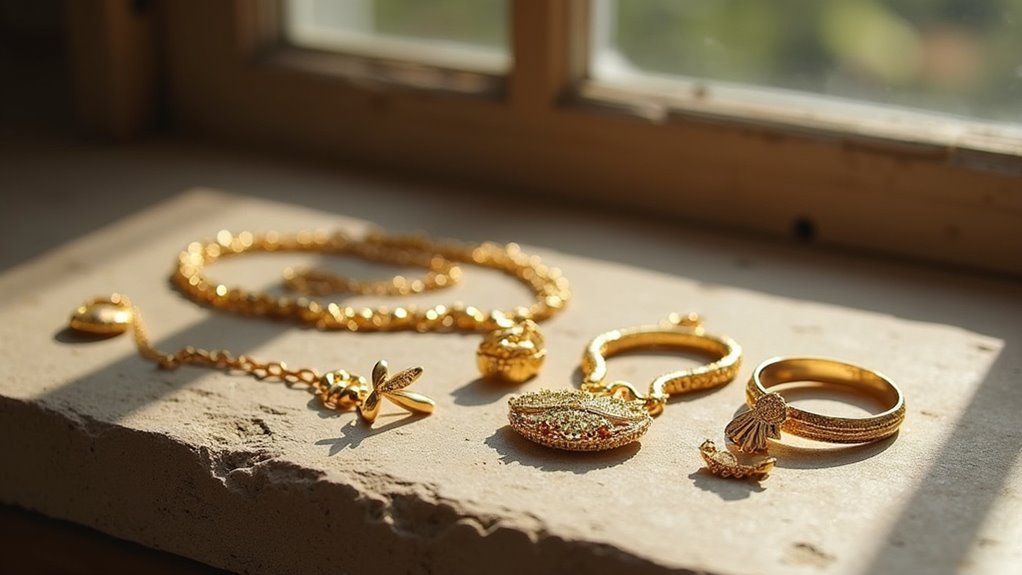

Gold jewellery carries immense value worldwide, symbolizing wealth, status, and tradition. From India’s sacred Mangalsutra to China’s 24k “Chuk Kam” gifts, it reflects cultural identity and economic power. In ancient Egypt, it linked pharaohs to divine eternity; in the West, it marks achievements and commitment. Economically, demand in Asia Pacific dominates over 60% of the global market. Its worth lies in history, scarcity, and emotion—stick around to uncover deeper insights.
Gold’s Cultural and Economic Significance Worldwide
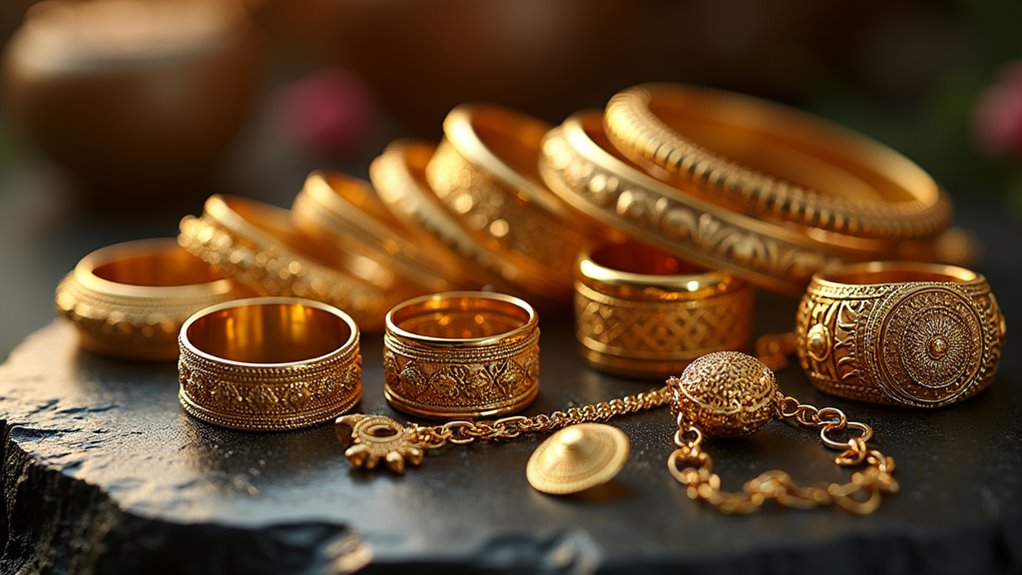
Often, gold jewellery is seen as more than mere adornment; it carries profound cultural, economic, and historical weight across the globe. Its allure spans centuries and continents, from ancient Egyptian tombs where it symbolized divine power linked to the Sun God Ra, to modern Dubai’s bustling Gold Souk with its 300 shops catering to wedding traditions. This precious metal isn’t just a commodity; it’s a repository of meaning, wealth, and identity, reflecting the values and histories of diverse societies.
Gold jewellery transcends mere decoration, embodying cultural, economic, and historical significance worldwide, from ancient Egypt’s divine symbols to Dubai’s vibrant wedding traditions.
In Asia, gold holds unparalleled cultural significance, particularly in India and China, the world’s largest consumers at roughly 849 and 984 metric tonnes annually. In India, it embodies prosperity and purity, tied to the divine through Goddess Lakshmi, and is central to weddings with the Mangalsutra and festivals like Diwali. Families pass it down as heirlooms, holding the largest private reserves at 24,000 tonnes, which contributes to the country’s standing in global gold production. Additionally, historical trends show that gold prices in India often rise during wedding seasons, further driving demand. The global gold market also indicates that fluctuations in pricing can impact consumer behavior significantly.
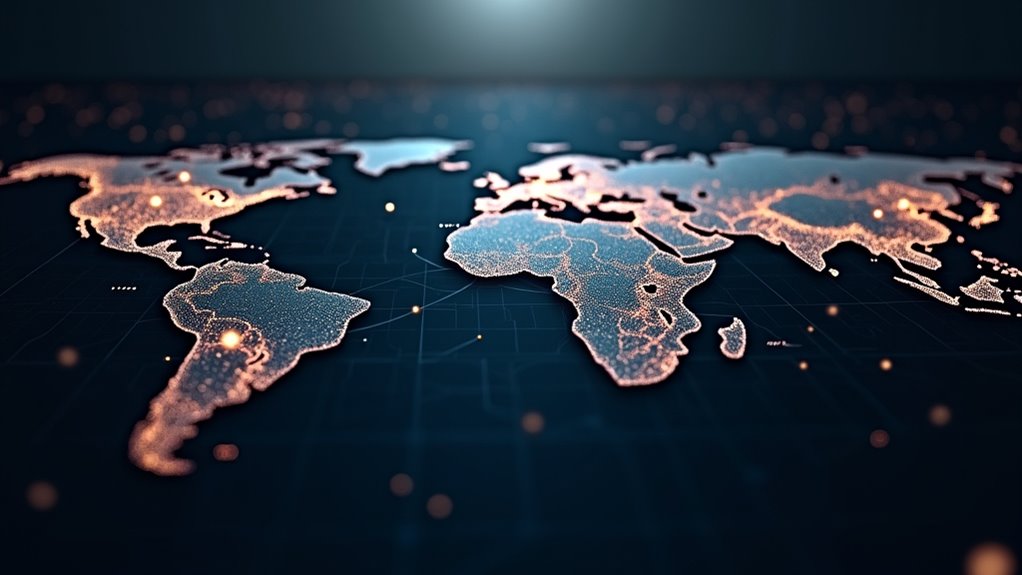
China views gold as a beacon of wealth and luck, with 24k “Chuk Kam” gifted at weddings and births, doubling as family investment and protection against the evil eye. Across the Asia Pacific, which commands over 60% of the global market in 2023, rising incomes fuel demand, with a projected growth rate of 6.1%.

Contrast this with the United States, the third-largest consumer at 160-193 metric tonnes yearly, where gold serves mixed purposes—industrial, investment, and jewellery. Here, 14k is popular, though 10k marks the legal minimum, reflecting a practical rather than purely symbolic approach. In Western cultures, gold often signifies achievement in medals or commitment through wedding rings, while in Russia, triple-band rings of white, rose, and yellow gold evoke the Holy Trinity.
Native American tribes, meanwhile, craft gold into designs representing spiritual purity and tribal ties, a tradition mirrored in South America’s Inca motifs of sun and condor, or Brazil’s Carnival flair with natural materials.
The Middle East and Africa weave their own narratives. In the UAE, high-purity gold—21k to 24k—dominates, tied to henna parties before weddings, while Saudi Arabia’s demand surged post-2016 Shariah changes, viewing it as a safe investment. Islamic traditions generally reserve gold for women, symbolizing elegance and status, often in amulets like the hamsa hand.
Ancient Egypt’s pharaohs wore it for eternal life, a belief in its mystical power that echoes through time. Gold’s value, then, isn’t merely in its sheen but in what it represents—security in uncertainty, divinity in devotion, status in society. Smart investing strategies in gold also reveal the complexities of its market dynamics, where demand and supply influence its perceived value.

Its global journey reveals a metal that binds humanity across eras and borders, each culture imprinting its story. Yet, questions linger: as demand grows, how sustainable is this obsession? Resources strain, and patterns of over-reliance on gold as wealth emerge. The weight of history is heavy, but so is the need to balance tradition with tomorrow’s reality.